
Sustainability: From Niche Differentiator To Mainstream Standard


Sustainability has become such a constant buzzword in the grocery sector that it is hard to know where to begin. It’s said that the concept of sustainability began during the Industrial Revolution. The modern evolution of sustainability began in the 1970s popularized alongside the first Earth Day. Though sustainability today is a key consumer priority; it was as early as 2018, when 88% of UK and U.S. consumers wanted brands to help them make more environmentally friendly choices.[1] Once a niche in the CPG sector, sustainability has become a mainstream consumer expectation, with nearly 66% of consumers considering it when making a purchase, rising to 75% among Millennials and Gen Z.[2]
Consumers’ Top Sustainable Issue: The War on Plastic
Plastic pollution is a top-of-mind issue for most consumers, and they increasingly expect brands to take a proactive approach on this matter. Canadians alone discard about 5.15M tonnes of plastic each year, yet only around 10% is successfully recycled.[3] The attached photo was taken in Portugal, June 2026. It resembles an octopus filled with plastic that was removed from the water of the local pier.
Sustainable Actions by CPG Brands
Consumers are demanding brands be committed to the environment, with 85% saying it is important for brands to practice sustainability.[4] The top 5 initiatives brands are focused on:
- Switch to suppliers that support environmental initiatives: 44%
- Product packaging that is produced with lower emissions: 40%.
- Switch to packaging using renewable energy: 35%[5]
- Switch to materials that are recyclable: 33%
- Switch to postconsumer recycled material: 32%.
The Size of the Sustainable CPG Market
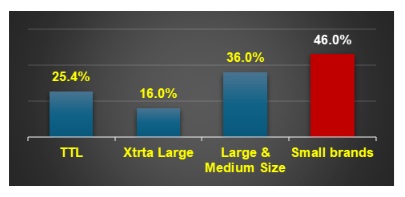
The global sustainable CPG market was valued at $928.4B USD in 2025 and is projected to top $1.89T USD by 2034, exhibiting a CAGR of 8.23% during the forecast period.[6] In the United States, sustainable-based products captured a 25.4% dollar market share in 2025. Their 5-year CAGR (2020-2025) was +10.9% vs.+2.2% for the conventional market. Since 2013, sustainable-based products dollar share has increased 74%.[7] Over the past two years, sales of certified organic food and household consumer products in Canada have increased 24%.[8]
Consumer Intentions – Sustainable-Based Products
While Gen Z and Millennials remain the primary target for sustainable products, brands should not overlook the potential of Gen X and Baby Boomers. Research reveals there is very little difference by gender when consumers were asked if they were more likely to choose a new product if they knew the company practices sustainability: Gen Z (78%), Millennials (75%), Gen X (74%), and Boomers (74%). Though sustainability drives value, a gap remains between willingness to pay more and current premiums.
The Dilemma

Today, almost nine-in-ten (85%) report that they are experiencing the disruptive impacts of climate change in their lives.[9] In instances where the sustainable price premium exceeds what consumers are willing to pay, brands should consider the following strategies:
- Emphasize how the brand attributes will directly impact their personal well-being.
- Emphasize fractional pricing: the cost of the product on a daily basis.
Big Brands Dilemma
While overall skepticism remains high, consumers tend to trust small brands more than large ones regarding sustainability. This trend is reflected in the sustainable dollar market share by company size as outlined below:[10]
Sustainable-Based Market Size by Company Size
US CPG Sector
The Key Principles of Honest Sustainability Marketing
Sustainability was once a unique point of difference, but it has now become a mainstream standard. Consumers are highly aware of environmental issues and expect brands to take responsibility for their impact on the planet. However, most consumers do not hear from brands regarding these initiatives, and when they do, they are often skeptical of the message:
- If a brand does not mention what it is doing to address societal issues, 53% say they will assume the brand is doing nothing or hiding something.
- On average, globally, across sectors, 57% of people say they have seen or heard false or misleading information about sustainable actions taken by brands.[11]
The penalty for dishonesty:[12]
- 77% of consumers state they would stop buying from a company found guilty of greenwashing (a deceptive marketing practice where a company makes false or misleading claims about the environmental benefits of a product or its entire operation).
The key principles of honest sustainability marketing include authentic storytelling, third-party certification, and clear communication:
- Storytelling: Share your brand’s journey towards sustainability, including the motivations behind your initiatives, the challenges you’ve faced, and the real impact of your efforts.
- Third-party certification: Obtain third-party certifications to enhance our credibility and reinforce our commitment to sustainable practices.
- Clear Communication: Use clear and straightforward language when communicating sustainability efforts: avoid jargon that may confuse or alienate consumers.
Food Distribution Guys Final Thoughts
We all share responsibility for protecting the planet we call home. For manufacturers, sustainability is no longer a niche concern; it’s a fundamental for their business to thrive in today’s market or be left behind. Today, consumers tie sustainability to their well-being. When asked “compared to non-sustainable products, do you believe sustainable-based products are better for your health and wellbeing?” only 6% of respondents replied No – I don’t think they’re healthier or safer.[13] I am honoured to be working alongside Mr. J. Plomer of JPS National Sales on the upcoming launch of 2 sustainable-based brands:
- Allorganic: Manufactured in Ontario, first organic certified line of laundry detergent, all-purpose cleaners, and air fresheners.
- Tuffy: garbage bags made from 100% recycled material with a minimum 75% level of post-consumer waste. Effectively, they turn trash into trash bags.
I leave you with this quotation:
“Small acts, when multiplied by millions of people, can transform the world.” – Howard Zinn
References:
- 88% of Consumers Want You to Help Them Make a Difference, www.forbes.com, 2018
- AI Overview, July 2026
- Plastic Waste and Pollution, Canada.ca, 2026
- A World of Difference: What Sustainability Means for Brands and Retailers, circana.com, 2026
- Economic Pressures Drive CPG Packaging Decisions Between Cost and Sustainability, www.packagingdigest.com, 2025
- Sustainable Food Market, www.fortunebusinessinsights.com, 2026
- Sustainability in the U.S. CPG: Inside the Mindset, Circana in Partnership with NYU Stern Centre for Sustainable Business, 2026
- The Canadian Organic Market 2026, www.canada-organic.ca, 2026
- Consumers willing to pay 9.7% sustainability premium, even as cost-of-living and inflationary concerns weigh, www.pwc.com, 2024
- Sustainability in the U.S. CPG: Inside the Mindset, Circana in Partnership with NYU Stern Centre for Sustainable Business, 2026
- Sustainability Consumer-Led Brand Ranking, Kantar, June 2026
- Do Consumers Care About Sustainability? What the Data Says (and What it Means for Your Brand), Nielsen IQ, 2026
- Sustainability in the U.S. CPG: Inside the Mindset, Circana in Partnership with NYU Stern Centre for Sustainable Business, 2026