
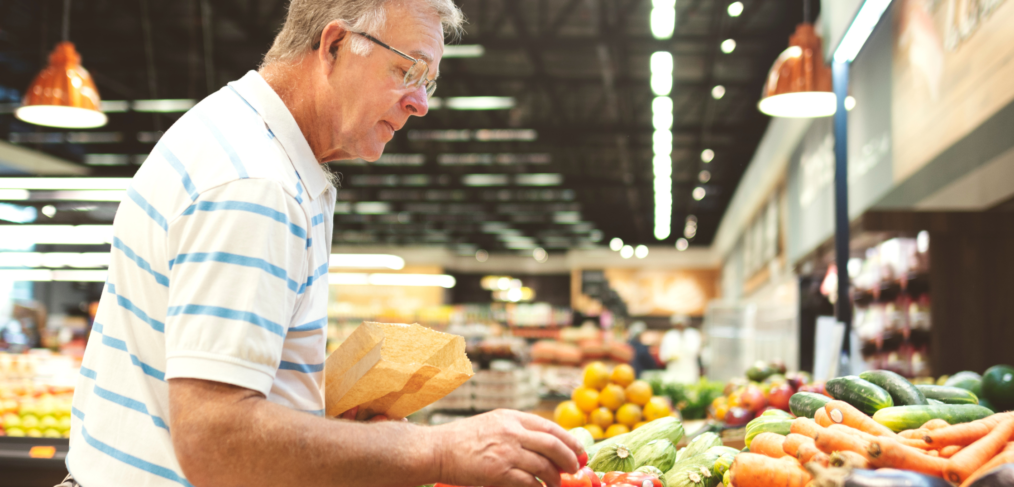
Baby Boomers – The Forgotten Grocery Shopper


Millennials and Generation Z have significantly influenced the grocery industry.
“They’re looking beyond tangible products and actually trying to understand what is it that makes the company tick. What’s its mission? What’s its purpose? And what is it actually trying to build for us as a society”?[1] Bo Finneman
To meet modern consumer expectations initiated by Gen Z and Millennials, it is essential brands emphasize transparency, traceability, and clean labeling. They have introduced vegetarian and vegan diets, with veganism often raising awareness about animal cruelty. The global vegan food market is expected to reach $132.2B USD by 2034.[2] These generations prioritize convenience and drive online sales, leading retailers to adopt omnichannel and social media marketing.
Both established and new brand entrants are increasingly targeting these generations. This is a strategic focus as their combined spending power this past year in Canada was $448B.[3] Yet brands in the process have ignored the Baby Boomer generation. As noted by Steve Morris, CEO of NewMedia.com, USA:” Ignoring Boomers’ $230 billion annual consumer spending on CPG is a failure to launch”.[4] As unit growth in the grocery industry remains flat, brands should not disregard this consumer.
Individuals born between 1946 and 1964, commonly referred to as Boomers, comprised 24% of Canada’s population in 2025.[5] With their spending power projected to exceed $338B in 2030,[6] they remain an influential consumer group for Canadian food brands. They tend to display stronger brand loyalty than younger cohorts.
How Much Do Baby Boomers Spend On Groceries?
The most recent data from late 2023 shows Baby Boomers spent 62% of their food budgets on groceries, a figure believed to have increased due to inflation. They generally spend more money on groceries as compared to other generations, as they are more likely to cook at home. They are also less likely than younger generations to replace meals with snacks. [7] Though a recent study undertaken by AI search and retrieval platform Algolia revealed only 26% of Baby Boomers were stressed about their grocery bills, compared to 30% of all respondents, they also found that 57% of them had switched from their favourite brand to a cheaper option in 2024-25, versus 54% of all respondents.[8]
What Are Baby Boomers’ Primary Eating Occasions?
Baby Boomers consistently eat three meals daily, unlike other generations, i.e. Breakfast: 64%, Lunch: 62%, and Dinner: 86%. Their primary snacking occasion comes after dinner: 32%.[9]
Are Baby Boomers Health-Conscious Eaters?
Baby Boomers are extremely health-conscious, actively focusing on longevity, fitness, and cleaner living through diet and exercise. In fact, eighty percent (80%) of them find clean living important, the highest of any generation. Their desire for clean living often starts at the label: 53% review nutrition labels more closely, 51% review product labels more closely, and 43% avoid certain ingredients.[10] They are increasingly avoiding highly processed foods, artificial ingredients, and high-sodium/sugar foods, and favour “food as medicine” for healthy aging, i.e.
- 50% seek low-sugar and low-salt snacks.
- 44% seek high-protein and high-fiber products.
- 43% are very or extremely interested in functional foods.[11]
Only 16% of Baby Boomers eat plant-based foods.[12]
Do Baby Boomers Purchase National Brands Or Private Label?
Baby Boomers are strong supporters of national brands, often exhibiting a stronger preference for established, recognizable names compared to younger generations. Yet, for the 52-week period ending June 2025, 31% of them increased their purchase of private label brands.[13]
Are Baby Boomers Concerned About The Environment?
Boomers, despite being the most skeptical about climate change, make efforts to cut waste and avoid plastic bags.
What is the Best Way to Connect with Baby Boomers?
To attract boomers’ attention, brands must understand their values and traits. They reward those with clear messaging and respond well to traditional messaging, social media, and email newsletters. Their top 3 social platforms: 1. YouTube: 68%; 2. Facebook 62%; and 3. Instagram 61%.[14] They continue to watch television and engage with traditional media, proving that brands shouldn’t rely solely on social media to reach them. A snapshot of the 3-step process to engage with boomers:[15]
| Stage | Key Platforms | Content that Converts |
|
Google, Facebook, Email newsletters | Informative blogs, brand history, and clear value propositions |
|
Facebook groups, brand blogs, review sites | Case studies, video testimonials, step-by-step guides |
|
Email, direct customer service, brand website | Visible guarantees, upfront pricing, simple paths |
Food Distribution Guy’s Final Thoughts
Baby Boomers remain the food industry’s quiet powerhouse as they have more disposable income than younger generations. As they retire, they know what they want and value reliable brands. Brands must earn their trust like any other generation. The brand’s reputation and history represent the 2 critical elements to gaining their trust. Don’t be misled. They are conscious food shoppers. For the 52-week period ending December 2025, 42% of the dollars spent at discount banners came from those households with incomes greater than 100K.[16]
References:
[1] Meet Generation Z: Shaping the Future of Shopping, www.mckinsey.com
[2] Vegan Food Market Size, www.fortunebusinessinsights.com, January 2026
[3] The X Factor, www.grocerybusiness.ca, September / October 2025
[4] Why Baby Bomers, Not Gen Z, Present the Food Industry’s Biggest Opportunity, www.foodinstitute.com, February 2026
[5] Canadian Generational Breakdown, www.brandspointpluscanada.com, 2025
[6] The X Factor, www.grocerybusiness.ca, September / October 2025
[7] Baby Boomers Food Budget Spend in Canada, AI Overview, February 2026,
[8] Why Baby Boomers Not Gen Z, Present the Food Industry’s Biggest Opportunity, www.foodinstitute.com, February 2026
[9] Eating and Drinking Occasions, Landscape 2024, The Hartman Group, February 2025
[10] Discover the Boomer Consumer, www.numerator.com
[11] Why Baby Boomers Not Gen Z, Present the Food Industry’s Biggest Opportunity, www.foodinstitute.com, February 2026
[12] Plant-based Consumption Across Generations, www.globescan.com, 2024
[13] Food and Beverage Private Label Trends in Canada, www.innovamarketinsights.com, June 2025
[14] Consumers Favourite Social Media Platforms, HubSpot Blog Research, Consumer Trends, 2024
[15] Marketing to Baby Boomers: Brand Trust over Brand Buzz, www.theinfluenceagency.com, January 2026
[16] The Future of Grocery Growth – Winning the Intentional Consumer in 2026, Nielsen IQ, January 2026